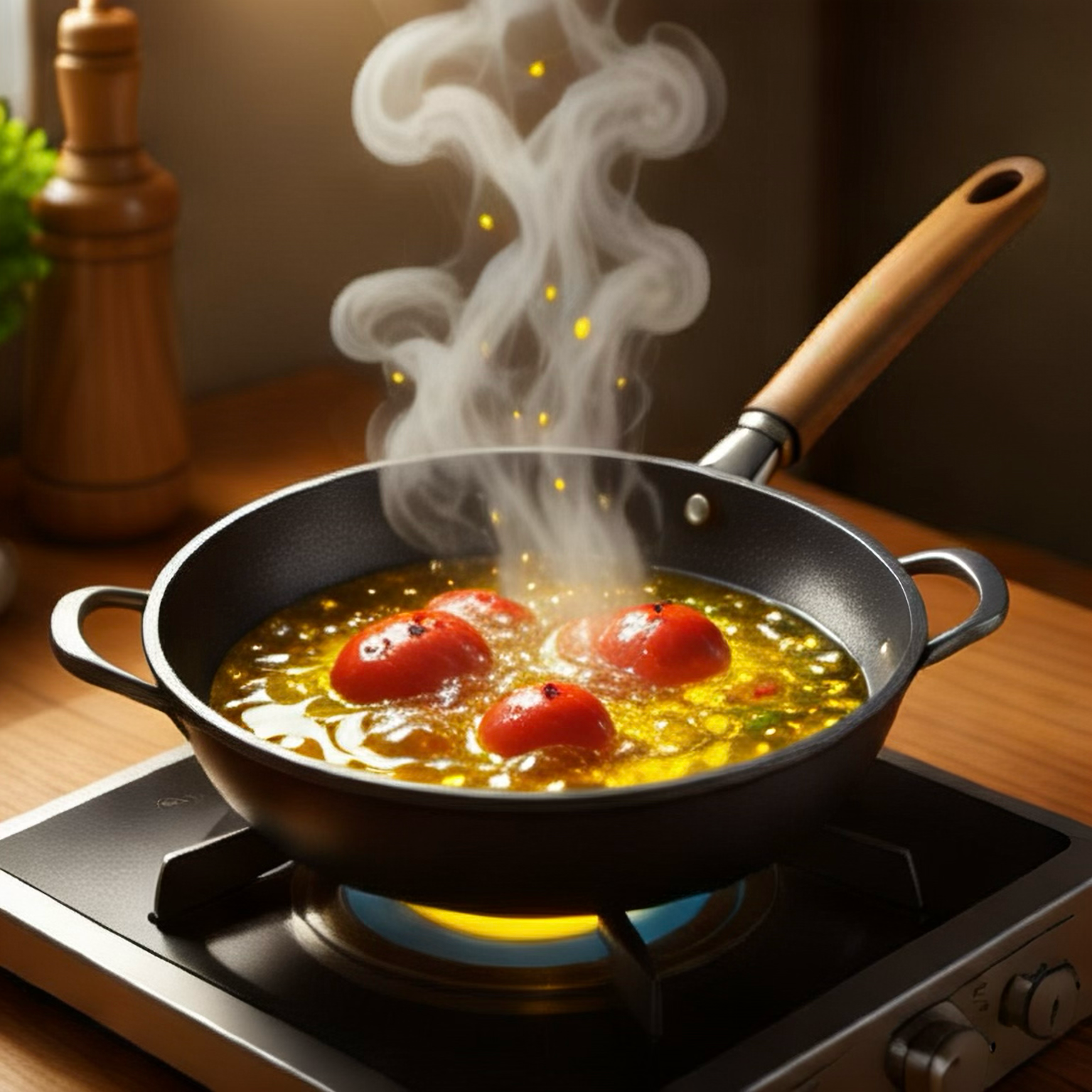
🔥 Tips Menggoreng Anti Gagal.
Menggoreng adalah salah satu teknik memasak yang paling sering digunakan, tetapi juga paling mudah gagal jika tidak dilakukan dengan benar. Banyak orang mengalami hasil gorengan yang terlalu berminyak, cepat gosong, atau tidak renyah karena kesalahan kecil seperti suhu minyak yang tidak tepat, bahan yang masih basah, atau teknik menggoreng yang kurang sesuai.
Kunci utama menggoreng yang sukses terletak pada pengaturan suhu minyak. Minyak yang terlalu dingin akan membuat makanan menyerap banyak minyak sehingga terasa berat dan lembek, sementara minyak yang terlalu panas dapat menyebabkan bagian luar cepat gosong tetapi bagian dalam belum matang sempurna. Suhu ideal untuk menggoreng umumnya berada di kisaran 170–180°C, cukup panas untuk membentuk tekstur renyah tanpa merusak rasa.
Selain suhu, jenis minyak juga berperan penting. Minyak dengan titik asap tinggi seperti canola, sunflower, atau vegetable oil lebih stabil untuk menggoreng dan menghasilkan rasa yang bersih. Penggunaan minyak yang tepat membantu menjaga kualitas gorengan serta mengurangi risiko rasa pahit akibat minyak rusak.
Teknik menggoreng juga tidak kalah penting. Menggoreng terlalu banyak bahan sekaligus dapat menurunkan suhu minyak secara drastis, menyebabkan hasil gorengan tidak merata dan berminyak. Oleh karena itu, menggoreng dalam jumlah kecil dan memberi ruang pada setiap bahan akan membantu mendapatkan hasil yang lebih renyah dan matang sempurna.
Persiapan bahan sebelum digoreng sering kali diabaikan, padahal sangat menentukan hasil akhir. Bahan yang masih basah atau mengandung air berlebih akan menyebabkan cipratan minyak dan menghambat pembentukan tekstur renyah. Mengeringkan bahan dengan tisu dapur sebelum menggoreng adalah langkah sederhana namun sangat efektif.
Dengan teknik menggoreng yang tepat, makanan tidak hanya menjadi lebih renyah dan lezat, tetapi juga lebih ringan dan tidak terlalu berminyak. Memahami dasar-dasar menggoreng akan membantu menghasilkan gorengan yang konsisten, aman, dan menggugah selera—baik untuk konsumsi sehari-hari maupun untuk jualan.
🔥 Frying Tips (English)
Frying is one of the most popular cooking methods, yet it can easily go wrong without proper technique. Common problems such as greasy texture, uneven cooking, or burnt surfaces often result from incorrect oil temperature, excess moisture in ingredients, or overcrowding the pan.
The most important factor in successful frying is oil temperature control. Oil that is too cool causes food to absorb excess oil, making it heavy and soggy. On the other hand, oil that is too hot can burn the outside while leaving the inside undercooked. The ideal frying temperature is typically 170–180°C (340–355°F), allowing food to cook evenly and become crispy without excessive oil absorption.
Choosing the right type of oil also matters. Oils with high smoke points, such as canola, sunflower, or vegetable oil, are more stable for frying and help maintain a clean, neutral flavor. Proper oil selection improves both taste and overall food quality.
Equally important is the frying technique itself. Overcrowding the pan lowers oil temperature and results in uneven, greasy food. Frying in small batches ensures consistent heat and allows each piece to cook properly. Preparing ingredients by removing excess moisture before frying further enhances crispness and safety.
With the right approach, frying can produce food that is crispy on the outside, tender on the inside, and not overly oily. Mastering these basic frying principles leads to better texture, flavor, and presentation whether cooking at home or preparing food for sale.
🍳 FRYING TIPS – ANTI GAGAL & RENYAH
🔥 1. Suhu Minyak Itu KUNCI
- Minyak harus panas sedang (170–180°C)
- Terlalu dingin → makanan menyerap minyak
- Terlalu panas → luar cepat gosong, dalam mentah👉 Tes cepat: masukkan sedikit adonan, kalau langsung naik & berbuih kecil, siap goreng.
🛢 2. Gunakan Minyak yang Tepat
- Minyak canola, sunflower, atau vegetable oil paling stabil
- Hindari olive oil untuk deep frying (mudah rusak)
🍗 3. Jangan Terlalu Penuh (Overcrowding)
- Goreng sedikit-sedikit
- Terlalu banyak → suhu minyak turun → hasil berminyak & lembek
🧻 4. Keringkan Bahan Sebelum Digoreng
- Air + minyak panas = cipratan & tidak renyah
- Lap bahan dengan tisu dapur sebelum masuk minyak
⏱ 5. Jangan Sering Dibalik
- Biarkan satu sisi matang dulu
- Terlalu sering dibalik → minyak masuk ke dalam makanan
🥄 6. Gunakan Tepung yang Tepat (untuk gorengan)
- Campuran tepung terigu + maizena → lebih renyah
- Untuk ekstra crispy: tambahkan air es atau sedikit baking powder
🧺 7. Tiriskan dengan Benar
- Angkat → tiriskan di rak kawat atau tisu dapur
- Jangan ditumpuk saat panas (uap bikin lembek)
♻️ 8. Jangan Pakai Minyak Berkali-kali
- Minyak gelap & bau → rasa pahit & tidak sehat
- Saring minyak kalau mau dipakai ulang (maks 2x)
🌬 9. Diamkan Sebentar Sebelum Disajikan
- 1–2 menit setelah digoreng → tekstur lebih stabil & crispy
⚠️ 10. Keamanan Dapur
- Jangan isi wajan lebih dari ½ tinggi minyak
- Jauhkan air dari minyak panas
- Selalu awasi saat menggoreng

🔥 Frying Tips for Crispy and Perfect Results
Frying is a simple cooking method, but achieving crispy, golden results without excess oil requires the right technique. One of the most important factors in frying is maintaining the correct oil temperature. Oil that is too cool causes food to absorb excess oil, making it greasy, while oil that is too hot can burn the outside before the inside is fully cooked.
Always preheat the oil to the proper temperature, ideally between 170–180°C (340–355°F). Using a thermometer is best, but a small piece of batter dropped into the oil should sizzle immediately and float to the surface. Choose oils with a high smoke point, such as canola, vegetable, or sunflower oil, to ensure stability and clean flavor during frying.
Avoid overcrowding the pan, as adding too much food at once lowers the oil temperature and leads to uneven cooking. Fry in small batches and allow space for each piece to cook evenly. Before frying, make sure ingredients are dry to prevent oil splatter and to help create a crisp exterior.
Once fried, remove food and drain on a wire rack or paper towels. Proper draining helps maintain crispness and reduces excess oil. With the right preparation and temperature control, frying can produce food that is crunchy on the outside, tender on the inside, and perfectly cooked every time.
🔥 FRYING TIPS – FAIL-PROOF & CRISPY
1. Oil Temperature Is the KEY
- Oil should be at medium heat (170–180°C / 340–355°F)
- If the oil is too cold → food absorbs excess oil and becomes greasy
- If the oil is too hot → the outside burns quickly while the inside remains undercooked
- Quick test: Drop a small piece of batter into the oil. If it rises immediately and forms small bubbles, the oil is ready for frying.
2. Use the Right Type of Oil
- Canola oil, sunflower oil, or vegetable oil are the most stable for frying
- Avoid olive oil for deep frying, as it breaks down easily at high temperatures
3. Do Not Overcrowd the Pan
- Fry in small batches
- Overcrowding lowers the oil temperature and causes uneven cooking and greasy results
4. Dry Ingredients Before Frying
- Excess moisture causes oil splatter and prevents crispiness
- Pat ingredients dry with paper towels before frying
5. Avoid Turning Food Too Often
- Let one side cook and become golden before flipping
- Turning too frequently allows more oil to enter the food
6. Drain Properly After Frying
- Remove food and drain on a wire rack or paper towels
- Do not stack hot fried food, as trapped steam makes it soggy
7. Do Not Reuse Oil Too Many Times
- Dark, smoky oil affects flavor and food quality
- Strain oil if reusing and limit reuse to no more than two times
8. Let Fried Food Rest Briefly
- Allow fried food to rest for 1–2 minutes before serving
- This helps the texture set and stay crispy longer